- Working Theory
- No. 11
- Author
- Chelsea Stewart
- Reading
- 2 min
How to Build a Brand Design System That Actually Scales
Learn how to build a scalable brand design system with flexible rules, visual identity principles, and guidelines that grow with your company.
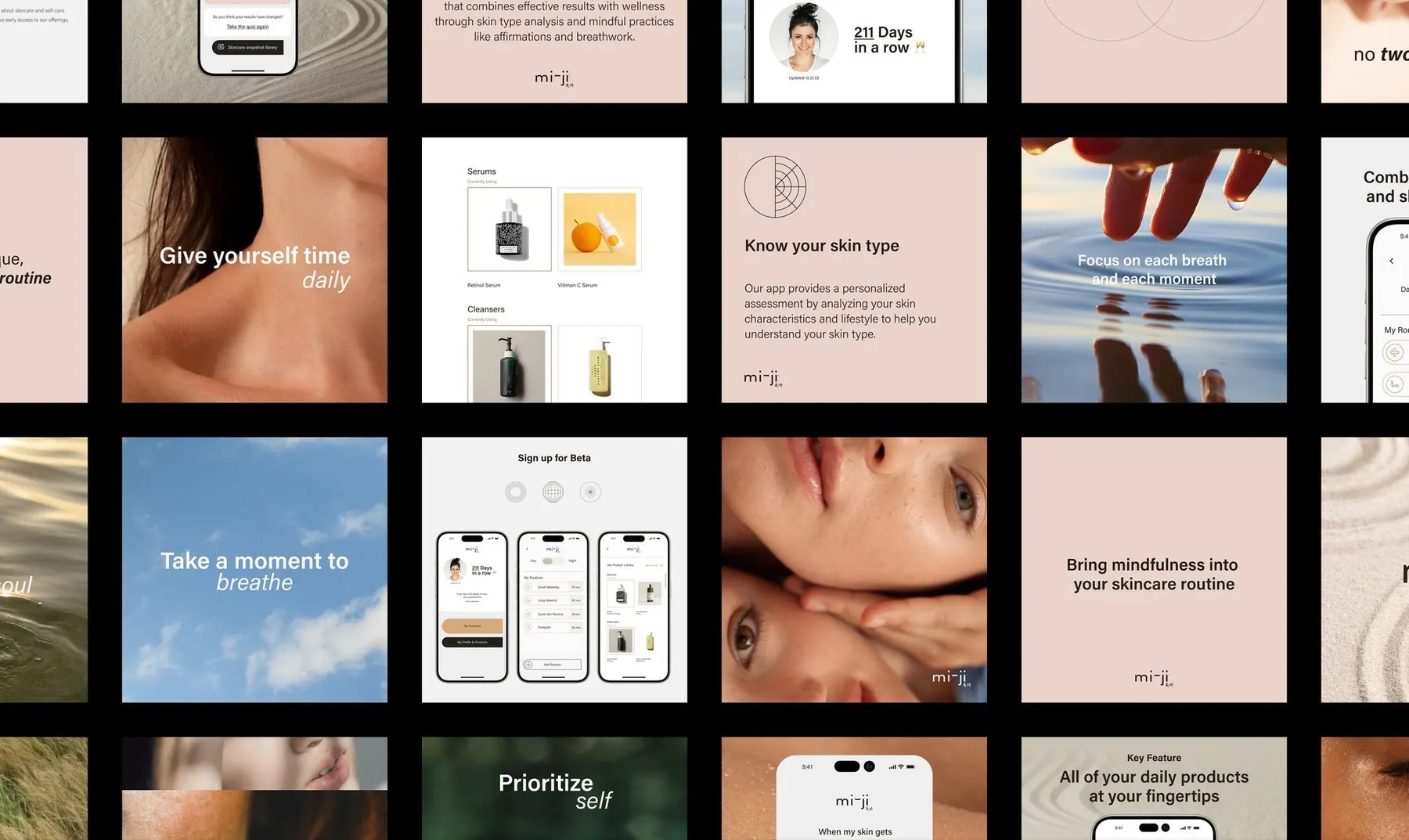
A brand system should make it easier to create things you haven’t designed yet.
That’s the difference between a visual identity and a collection of finished assets.
A logo, color palette, typeface, and set of templates can establish a recognizable look. But companies don’t stay inside the boundaries of the original presentation. They launch products. Hire teams. Enter new markets. Build campaigns. Make things nobody anticipated when the identity was created.
The brand has to survive all of it.
The goal isn’t consistency for its own sake. It’s creating enough structure that the brand remains recognizable while giving people enough freedom to keep moving.

Start With Behavior, Not Assets
Most brand guidelines begin with components: logo, color, typography, photography, iconography.
Those things matter, but they don’t explain how the brand behaves.
Before designing the pieces, define the relationships between them. What is always present? What can change? What should dominate? What should stay quiet? When does the system become expressive? When should it disappear and let the content lead?
Those decisions create the actual visual language.
A scalable brand system doesn’t tell designers exactly what every future artifact should look like. It gives them enough information to make a good decision when the answer isn’t already documented.
Consistency Is Not Sameness
One of the easiest ways to make a brand recognizable is to make everything look identical.
It’s also one of the easiest ways to make it boring.
Real consistency comes from repeated logic. A brand might consistently use dramatic scale, a particular relationship between typography and imagery, an unusual grid, recognizable motion behavior, or a specific approach to color.
The execution can change while the logic remains intact.
Design the Rules Before the Templates
Templates are useful once you understand the system. They’re dangerous when they become the system.
Instead of starting by designing ten social templates, define the rules that should govern all social content. Then make a few examples that demonstrate those rules.
This changes guidelines from a library of things to copy into a framework for making decisions.
Build for Different Levels of Expression
Not every brand moment deserves the same amount of visual energy.
A product settings screen, investor presentation, billboard, event booth, social post, documentation page, and company T-shirt are solving different problems.
A strong brand system has gears: quiet, functional, expressive, and sometimes weird.
They should all belong to the same system without using every brand element at once.

Test the System Somewhere Uncomfortable
Don’t only test a brand identity on the beautiful applications.
Put it somewhere difficult: a dense product interface, a legal document, a tiny mobile screen, a conference booth, a spreadsheet, a monochrome printout, or a piece of merchandise.
A system becomes easier to understand when you find the places where it starts to break.
Let Other People Use It
One of the best tests of a brand system is handing it to someone who didn’t create it.
If they can only produce good work by copying existing examples, the system probably isn’t finished.
If they can create something you never designed and it still clearly belongs to the brand, you’ve built something much more useful.
The goal isn’t to control every artifact. It’s to create a system that continues making good decisions after you’ve left the room.